

Male Hair Loss — Androgenetic Alopecia: Why It Happens and When to Act
Medically reviewed by Dr. Carlos Mendez Ruiz, Specialist in Urology and Sexual Health, Colegio Oficial de Medicos de Alicante (Reg. No.: 03-45678) — Updated January 2026
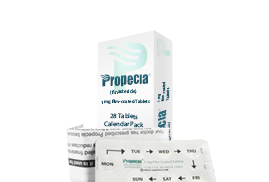
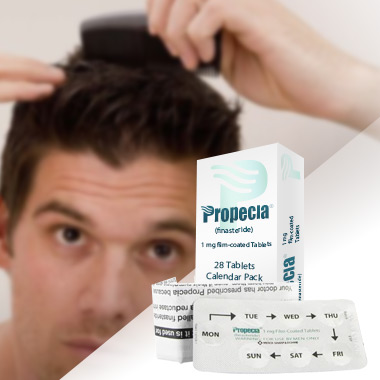
Androgenetic alopecia — commonly called male pattern baldness — affects approximately 50% of men over 50 in Spain and begins to manifest in many from the age of 20–30. It is not a dangerous condition, but it has a real impact on self-esteem and quality of life. There is only one oral drug approved by the AEMPS to stop it: finasteride 1mg (Propecia). This section explains why hair loss happens, how to identify which stage you are at, and what result you can realistically expect from treatment.
Why Hair Falls Out — The Role of DHT
Androgenetic alopecia is not a vitamin deficiency or stress — it is a genetically determined hormonal process. Understanding it is key to knowing why the treatment works:
50%
of men over 50 have androgenetic alopecia
60%
reduction in scalp DHT with finasteride 1mg/day
83%
of men stabilise hair loss by 12 months of treatment

Norwood Scale — Which Stage Are You at and What Can You Do
Key conclusion: The earlier treatment is started, the better the result. At stages VI–VII follicles no longer exist — no drug can regenerate hair where there is no active follicle.
Finasteride vs Minoxidil — Two Treatments, Two Complementary Mechanisms
Combination recommended by trichologists: Oral finasteride 1mg + topical minoxidil 5% act through completely different mechanisms and are fully compatible. The combination produces superior results to either one alone — it is the most common protocol in specialised hair loss clinics.
Our Hair Loss Product
Frequently Asked Questions about Hair Loss
Is hair loss from stress or diet androgenetic alopecia? Not necessarily. Androgenetic alopecia is genetic and hormonal — it follows a predictable pattern (Norwood scale). Stress-related hair loss (alopecia areata or telogen effluvium) is usually diffuse, without a pattern, and in many cases reversible when the cause is resolved. If loss follows a pattern of temples + crown, it is androgenetic.
The earlier treatment is started, the better the results? Yes — by far. At stages I–III the follicle is still active and finasteride can not only halt but recover hair. At stages VI–VII the follicle no longer exists and no treatment can regenerate it. The optimal moment is when loss is first noticed, not when it is already visible to everyone.
Does finasteride cause erection problems? In the Liu (2016) meta-analysis of 17,494 patients treated at 1mg, finasteride was not significantly associated with sexual function alterations. Sexual effects are uncommon at this dose and reversible on stopping treatment according to the AEDV (Spanish Association of Dermatology and Venereology).
Are Propecia Generic and original Propecia equally effective? Yes. The active ingredient (finasteride 1mg), bioavailability and efficacy are identical. The generic can be 70–80% cheaper as it does not carry the marketing and research costs of the original.
Delivery Across Spain
We ship in 4–7 days to all provinces in discreet neutral packaging: Barcelona — Madrid — Valencia — Alicante — Seville — Malaga — Zaragoza — Bilbao — Vigo — A Coruna — Murcia — Palma de Mallorca — Las Palmas — Santa Cruz de Tenerife — and all other localities in Spain.
The information is for educational purposes only and does not replace medical advice. For any doubt about hair loss, consult a dermatologist or trichology specialist.




- Barcelona
- Madrid
- Valence
- Seville
- Saragosse
- Malaga
- Murcie
- Palmier
- The Gran Canarian palms
- Bilbao
- Alicante
- Cordova
- Valladolid
- Vigo
- Gijón
- L’Hospitalet de Llobregat
- La Coruña
- Pomegranate
- Vitoria
- Elche
- Oviedo
- Santa Cruz of Tenerife
- Badalona
- Cartagena
- Tarrasa
- Jerez de la Frontera
- Sabadell
- Mostoles
- Alcala de Henares